Light Color Quarter Kernels
2. Quality assurance: Direct sourcing with multiple in-line inspections. Consistent particle size across batches.
3. Sample service: Free samples available for customer testing before ordering.
4. MOQ: Flexible order quantities. Minimum quantity negotiable.
5. OEM customization: Custom packaging specifications and brand labelling to suit different channel requirements.
6. After-sales service: Full order tracking from placement to delivery. Quality issues handled through negotiation. Timely after-sales response.
7. Processing methods: Dry-cracked to extract kernels. Precise screen grading ensures quality.
Raw material origin: Sourced from Aksu, Xinjiang. Dry-cracked to extract kernels, preserving natural colour and flavour.
1. Product Characteristics
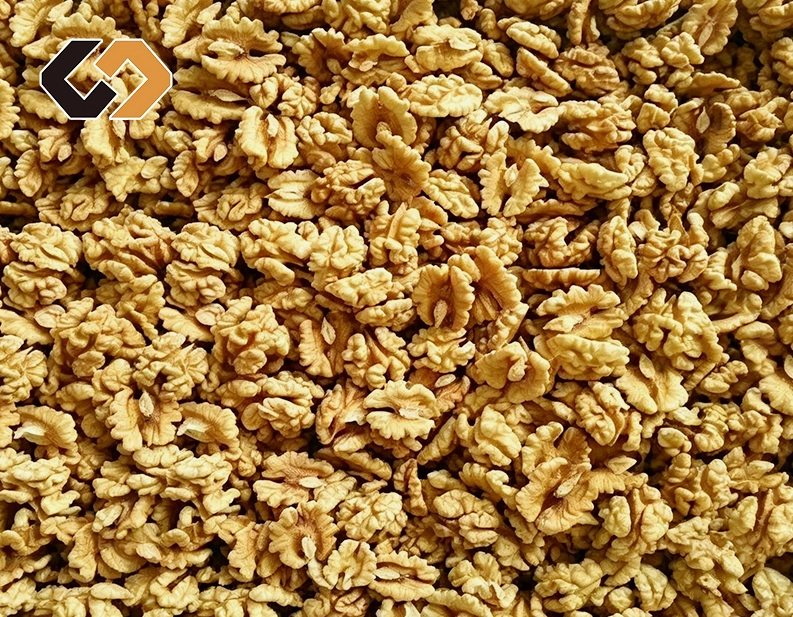
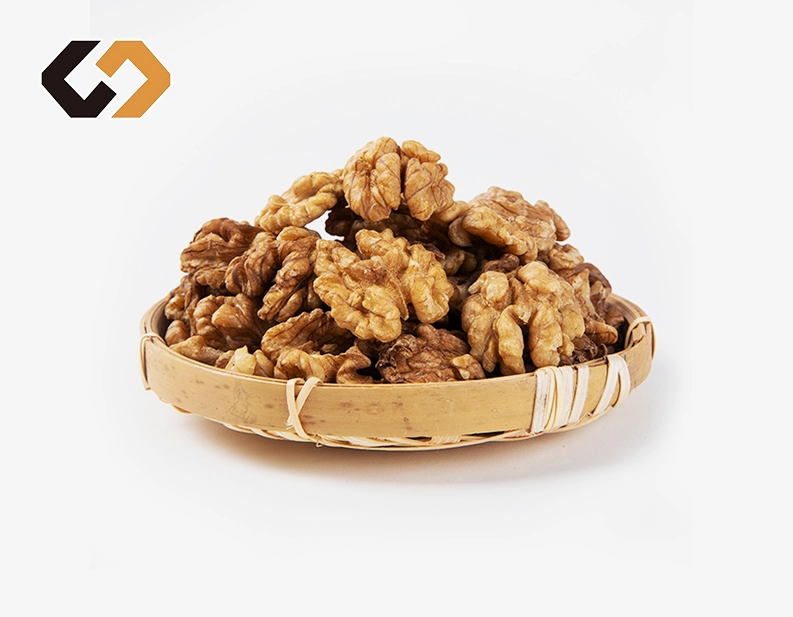
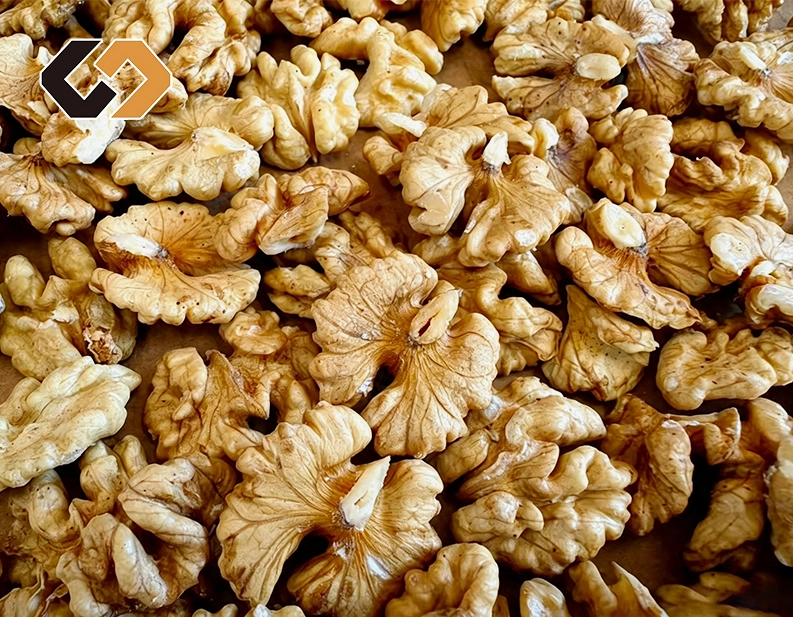
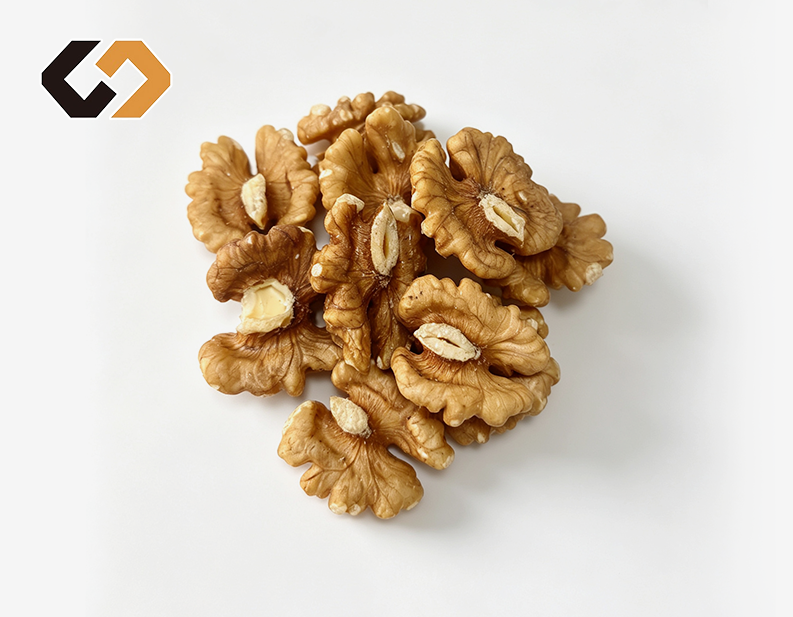
Light Color·Quarter-Kernel is a broken-kernel grade in walnut kernel classification. Light Color refers to kernels with a light yellow colour tone, sitting between Light White and Plain White, with good colour uniformity. Quarter-Kernel refers to irregular broken pieces, with particle size approximately one quarter of a whole kernel. This grade has a clear raw material source and belongs to the "mid-grade" category in commercial walnut kernel grading, with a well-defined application profile.
Quarter-Kernel differs from Half-Kernel in form grading – Half-Kernel emphasises the completeness of the kernel half, while Quarter-Kernel is primarily graded by particle size. The broken form offers better dispersibility when mixed with other ingredients, making it suitable for processing scenarios where even distribution of nut pieces is required.
Specifications
|
Parameter |
Specification |
|
Product Name |
Walnut Kernels (Light Color Quarter Kernel) |
|
Colour Grade |
Light Color (light yellow) |
|
Form Grade |
Quarter-Kernel (broken pieces, about 1/4 kernel size) |
|
Origin |
Aksu, Xinjiang |
|
Cracking Method |
Dry-cracked |
|
Form Characteristics |
Irregular broken pieces |
|
Packaging |
Cartons or customised upon request |
3. Uses
With its broken-particle form as the core feature, Light Color·Quarter-Kernel offers a differentiated positioning from half-kernel products. While half-kernel products focus on form integrity and visual presentation, quarter-kernel focuses on mixing uniformity and convenience of use.
Filling Applications: The broken form offers high mixing uniformity with filling bases, making it suitable for mooncake fillings, tangyuan fillings, and bun fillings. The small particle size prevents abrupt textural interruptions in the filling, ensuring even distribution.
Sprinkling and Decoration: Can be used as a topping for bread, cakes, and cookies. The broken pieces have good adhesion, do not easily fall off after baking, and create an even surface coverage.
Spreads and Paste Products: Suitable for producing walnut butter and walnut spreads. The quarter-kernel particle size is ideal for grinding, reducing processing time and equipment wear.
Cold-Processed Foods: Suitable for ice cream, yogurt, and pudding. The broken pieces disperse well, ensuring nut distribution in every bite and preventing issues with large particles sinking or uneven distribution.
4. Usage Scenarios
Light Color·Quarter-Kernel is suitable for commercial scenarios where mixing uniformity and convenience of use are important.
Filling Processing Companies: Used in the production of mooncake, tangyuan, and bun fillings. The broken form mixes evenly with filling bases such as sugar, oil, and red bean paste, making it suitable for standardised production.
Bakery Shops: Used as a topping for bread, cakes, and cookies. The quarter-kernel size is moderate with good adhesion, remaining in place after baking – suitable for shop-scale batch production.
Spread and Sauce Manufacturers: Used in the production of walnut spreads and walnut salad dressings. The quarter-kernel size facilitates grinding, improving production efficiency.
Dairy and Beverage Companies: Used in walnut-flavoured yogurt, walnut ice cream, and walnut pudding. The broken pieces disperse well and do not easily clump or settle in frozen or refrigerated states.
5. Material (Origin & Raw Material)
Produced in Aksu, Xinjiang, using high-quality varieties such as the 185 paper-shell walnut. Aksu is located in the premium nut-growing belt at 41°N latitude, with ample annual sunshine, large day-night temperature differences, irrigation from Tianshan snowmelt, and sandy loam soil.
The raw material for quarter-kernel comes from the broken pieces naturally produced during walnut kernel processing, with a traceable source. The colour is naturally light yellow, and particle size is controlled through grading and screening to ensure good size uniformity.
6. Production Process
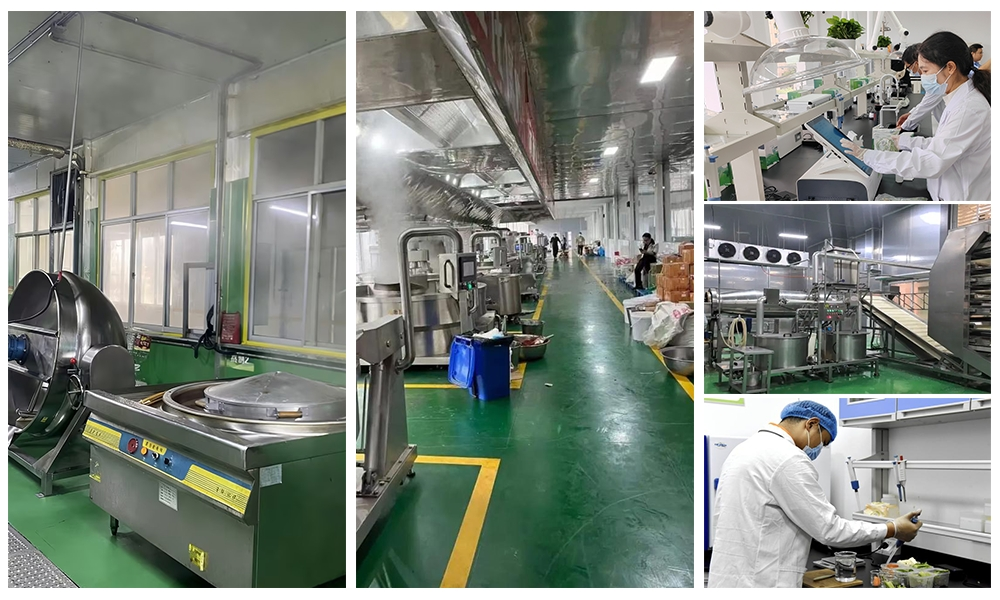
After walnuts are fully air-dried, they are cracked to extract the kernels. After extraction, colour grading is carried out first to select kernels meeting the Light Color colour standard. Screen grading follows to separate particles of different sizes, with quarter-kernel collected as a specific size grade. Impurity removal is carried out last. Standardised quality control is applied throughout the process to ensure uniform particle size, consistent colour, and thorough impurity removal.
7. Quality Control
Raw material sourcing: High-quality walnuts from Aksu, Xinjiang.
Colour grading: Selection according to Light Color colour standards.
Form grading: Screen control of particle size to ensure uniform quarter-kernel size.
Impurity removal: Defective kernels and impurities removed.
Final inspection: Colour, particle size, and impurities checked.
8. Packaging & Shipping
Packaging: Standard export packaging is 25kg woven polypropylene bags with inner moisture-proof liners to ensure protection against moisture and compression during transit. Customized packaging is also available upon request, including small retail packs, supermarket-ready units, and premium gift boxes.
Shipping: We support sea freight, air freight, and rail transport, with delivery to major domestic ports and overseas destinations. All orders are shipped directly from the origin, with full traceability throughout the logistics chain to guarantee safe and on time delivery.
9. Delivery & Samples
Sample Service: Free samples are available and can be sent to your designated address. You are welcome to conduct your own quality checks before placing an order.
Lead Time: Orders are normally dispatched within 3–5 working days after confirmation. For large-volume orders, shipping schedules can be negotiated. We also support LCL consolidation to accommodate mixed orders and flexible purchasing needs.
MOQ: Our MOQ is flexible,we accept both small trial orders and bulk custom orders.

10. After Sales Service
End to end follow up: A dedicated representative will track your order from placement to delivery, providing real‑time updates on shipping status.
Quality guarantee: If any quality issues are confirmed upon verification, we will negotiate a return or replacement.
After-sales response: Dedicated after-sales support with response within 24 hours of feedback.
Long term partnership: For regular clients, we prioritise stock allocation during peak seasons to ensure stable supply.
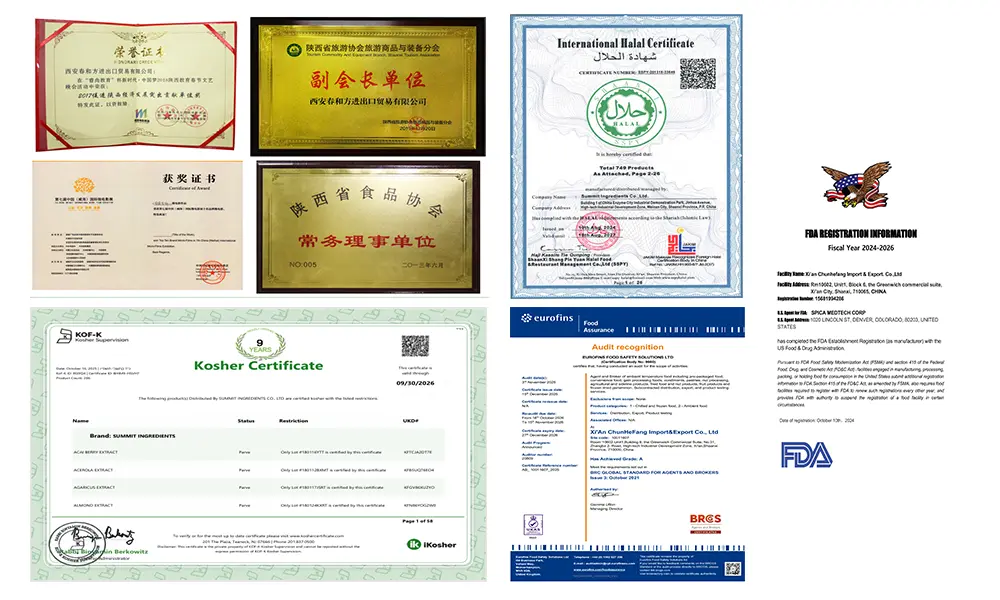
11. Certifications & Compliance
Compliant with GB/T 20398‑2006 Grade A standard for walnuts.
Qualified for export commodity inspection, with full support for customs declaration and clearance.
Sourced from green planting bases in Aksu, Xinjiang, with full traceability.
Our processing facility has years of export experience, serving markets including Germany, the UK, Canada, Australia, and more.
Upon request, we can provide Certificates of Origin, quality inspection reports, health certificates, and other required documentation.
12. Exhibitions
13. FAQ
Q1: What’s the difference between 185 paper shell walnuts and regular walnuts?
A: The shell is only 0.6–0.8mm thick you can crack it open with your fingers. Kernel yield is 60%–77.8%, much higher than ordinary walnuts.
Q2: What’s the difference between washed and unwashed 185 walnuts?
A: Washed walnuts have a cleaner, brighter appearance, ideal for retail shelves. Unwashed walnuts retain a more natural colour and are often preferred for further processing. Both have the same internal quality choose according to your needs.
Q3: What is the minimum order quantity?
A: We are flexible the MOQ can be negotiated, with a baseline of 1 tonne.
Q4: Do you offer custom packaging and OEM services?
A: Yes. We can tailor packaging formats, sizes, and even brand labels to your specifications just let us know your requirements.
Q5: What is the shelf life?
A: 12 months when stored in a cool, dry, and well‑ventilated place.
Q6: Can I get a sample?
A: Yes, samples are provided free of charge; you only need to cover the shipping cost.